Sunday, October 7, 2012

Kona

The word "Kona," much like "Boston," "Leadville," "Badwater," "Western States," or "RAAM" carries a lot of weight in the amateur endurance sporting community.  Over the last several weeks, when I have told runners, cyclists, or triathletes that my next race is Kona, I haven't really had to explain to them what Kona is or what it means that I get to race there.  Even when I tell folks who are not endurance athletes that I'll be racing an Ironman in Hawaii, I've gotten comments like, "Oh, you're doing the original Ironman," or "You're doing the real one" (as if iron-distance races in Florida, Kentucky, Penticton, Coeur d'Alene, California, New York, or anywhere else are somehow fake).

While qualifying to compete in Kona was my goal as soon as I quit cycling full-time to become a triathlete, I realized a few weeks after qualifying at Ironman Coeur d'Alene that Kona's reputation had me spooked.  I was feeling the pressure, and I even, at times, dreaded the race.  As soon as I started getting back in shape, though, I began to get excited about what was ahead.  Now, with only six days until the big show, I'm excited for the start.  

Tracking Information!


The race starts at 7:00 a.m. on Saturday, October 13.  (Yes, Saturday.  Most Ironman races are on Sunday, but the World Championships are on Saturday.)  Kona time is six hours behind eastern time, so I won't be starting until it's 1:00 p.m. in Atlanta.  (And yes, adjusting to that time difference in only a couple of days before the race has me a bit nervous.)  I'll be wearing number 1375.      

You can track me at Ironmanlive.com. They will have streaming video of the race, but it will be focused on the pros at the front who will start twenty minutes before me.  There will also be television coverage of the race broadcast in a month or so, but it too will be mostly focused on Craig Alexander, Chrissie Wellington, and their ilk.    

I appreciate it when people follow along online.  I think of it every time I pass over a timing mat.  Of course, if you do follow along and if you see that 1500 out of the 1900 people competing are in front of me coming out of the water, don't sweat it: the swim ain't my thing.  Normally, I expect to be in the middle of the pack on the swim, but the middle of the pack in Kona last year was 1:13.  (The middle of my age group was 1:09.)  At this point in my triathlon career, it would take a miracle for me to swim that fast.  I'll be spotting the middle of the pack a good five to ten minutes at Kona.  

Speaking of My Expectations for the Race . . . 

I decided that I had better play it safe going into this race both in terms of what I expect from myself and what I tell other people.  Ahead of Coeur d'Alene, I matter-of-factly said that I figured I would be a middle-of-the-pack swimmer, one of the fastest cyclists, and one of the very fastest runners.  That's what happened.  In retrospect, though, I realize that my writing that in my blog was a bit brash.  I have too much respect for Kona and for my competitors there to write or say anything that could be construed as cocky.   

That being said, the first goal is to make it to the start.  This is always the first goal in our family.  Barring anything catastrophic, I should be at the pier on Saturday morning, waiting for the cannon to fire.  The second goal is to finish.  The third and fourth goals, though, I'm going to keep to myself.  As you can see from last year's results, even if I swim well, I can't expect to be mowing people down on the bike:  


The average bike split last year was 5:56.  In my age group last year, it was a much snappier 5:19.  If things go well, I should be able to go a bit faster than my age group average, but not a whole, whole lot faster.  The average run split in the race was a 4:15, while in my age group, it was 3:50.  My qualifying run split in Coeur d'Alene was nearly an hour faster than this.  In other words, if I remain patient and execute my race plan, the run is where I should be able make up the most ground.     

That's as much as I'm going to talk about my goals, though.  I'm confident in my capabilities based on my buildup (see below), but I don't want to come off as overconfident.  More importantly, I don't want to BE overconfident, and acting humbly is a good way for me to insure that I remain humble . . . at least until it's time to dig deep in the late stages of the race.  At that point, I become everything that I try not to be when I'm not racing: judgmental, superficial, self-aggrandizing, and downright mean.  If you're tracking me and you see that I'm passing a lot of people on the run, you will know that I'm mentally trash-talking every one of them as I go by.  

The Weather!

Much is made of the weather in Kona.  Specifically, people talk of the wind and the heat.  Wind is not my friend, and I don't relish having to fight the legendary mumuku winds.  Here's the forecast for the days that we'll be in Kona:

(This is like the weather-report version of a metronome.)

Of course, they don't predict any abnormal wind on race day, but we'll see.  Having been a cyclist, I'm confident about my ability to handle my bike if I get blown hard off my line, but I'm hoping not to have to test myself against any 60 mile-per-hour crosswinds.  I'm torn, though, as to whether I want a totally calm day.  Wind is not the same for everyone.  I'm a strong cyclist, which would suggest that I might want a tougher day.  But I'm also a lighter cyclist without the very latest cutting-edge aero gear, which means that I'm more susceptible to getting blown around.  Of course, regardless of what I want, I will have no control over the wind, and any stressing I do about it is probably wasted energy.      

And then there's the heat.  I know that it will be hot--particularly in the lava fields during the last hour or so of the run--but I feel that I'm well-prepared.  Here's the weather forecast for Atlanta for the time that we're going to be in Kona:

While our fall mornings are a bit cooler, the high temperatures are roughly the same.  I've been training in the 80s (and above) since July, and as the temperature cooled in the last few weeks, I've saved my outdoor workouts for the warmest part of the day (which was normally right about 80 degrees).  This is not to say that I'll thrive in the heat, but I do think that I'll be better prepared for it than someone coming from the Upper Peninsula of Michigan, North Dakota, or even Colorado, all of which had snow this weekend.  I grew up in the South; I know heat.  

My Buildup!    
   
I pay close attention to my training in the last eight weeks leading up to an Ironman, and I pay particularly close attention to the last five weeks.  Having had a successful race at Coeur d'Alene, I feel like I know what works: a lot of cycling including some hard work and climbing mixed in, mostly longer runs with some fast workouts mixed in, and some long swims.  (My coach and I going to re-examine this formula before Ironman Wisconsin next September, but I'll write more about that later.  I haven't even discussed it with him yet.  Oh, by the way, I'm doing Ironman Wisconsin next September.)  This week, I looked back at my buildup to Coeur d'Alene between eight weeks to go and my taper week, and I compared that to the training I've done in my buildup to Kona between eight weeks to go and my taper week (i.e. right now).  I was expecting to see that I had actually done a bit less ahead of Kona, but I was pleasantly surprised.  In fact, my overall training hours were almost identical.  

I was further bolstered when I broke it down by sport.  The number of bike rides I did in each buildup was roughly the same (16 leading up to CdA and 15 leading up to Kona), and the number of hours on the bike (61) was exactly the same.  In addition, I spent seven days riding in the mountains ahead of Kona, while I only spent four days riding in the mountains leading up to Coeur d'Alene.  Ahead of Coeur d'Alene, I raced twice: at the Rev3 Half-Rev in Knoxville and the Rev3 Half-Rev Aquabike in Quassy.  Ahead of Kona, I haven't raced, but I have done several cycling events (i.e. organized centuries).  Ahead of Coeur d'Alene, I did a seven-hour ride and an eight-hour ride.  Ahead of Kona, I did a seven-and-a-half-hour ride.  All in all, I'd say I'm in a good place cycling-wise.  Last weekend, I set a personal record for the difficult Hogpen Gap climb in North Georgia during the renowned Six Gap Century.  That's obviously a good sign.  My last long ride on Wednesday had some good power numbers and a low heartrate average.  That's a winning combo.  

If I compare my running over the same period, I find that I'm actually in a much better place now.  Ahead of CdA, I did 17 runs for a total of 199 miles.  Amongst those runs were two 20+ mile runs, 1 brick, 1 race (Rev3 Knoxville Half-Rev), and three traditional track workouts that I did on the dirt oval in the park across from out house.

(If the field looks familiar, you must have seen"What to Expect When You're Expecting." )

Ahead of Kona, I've done twenty runs for a total of 227 miles.  Amongst those were two 20+ mile runs, two bricks, five track workouts on the dirt, and no races.  While I'm happy that the raw numbers are higher, I put more stock in the fact that my workouts are actually stronger if I compare them one-to-one.  Three weeks out from CdA, I did an 80-mile bike ride with climbing, and then ran a hilly eight miles in 51:52.  Three weeks out from Kona, I did a 60-mile bike ride with climbing, and then ran a hilly eight miles in 49:08. My best track workout ahead of CdA was a 6x800 workout where I averaged 2:34 (5:08 mile pace).  My best track workout ahead of Kona was a 4x1200 workout where I averaged 3:48 (5:04 mile pace).  In my last twelve-mile run on trails one week out from CdA, I ran 1:20:12.  Yesterday, I did the same twelve-mile run in 1:17:53.  

Swimming?  Yes, I've done a lot of swimming.  A friend recently told me that I'm such a bad swimmer relative to my cycling and running that she figured that I must never swim.  In fact, I do plenty of swimming . . . I'm just not very good at it yet.  Granted, I don't swim as much as I do the other two sports, but I'm working on it.  In the seven weeks leading up to the CdA taper week, I did ten swims, including one workout and two races.  In the last seven weeks leading up to my Kona taper week, I've done twelve swims, including three workouts and no races.  I also swam a great deal more in period between twelve-weeks-to-go-to-Kona and eight-weeks-to-go-to-Kona than I did in the period between twelve-weeks-to-go-to-CdA and eight-weeks-to-go-to-CdA.  Thus, it stands to reason that I'm in a better place going into Kona than I was going into CdA.  Do I sound uncertain?  I am.  Swimming continues to baffle me.  I can hardly tell from one day to the next whether I'm going to swim 1:50 per hundred or 2:07 per hundred.  

I actually had a better swim at Ironman Cozumel (1:20:35) than I had at Coeur d'Alene (1:22:55).  If I compare the buildup to Cozumel to my current buildup, I find that I swam more leading up to Cozumel, but I did no workouts.  In addition, I was swimming more slowly overall at that point in my swimming career.  In my mind, I've been comparing the Kona swim conditions (warm, sunny, clear saltwater) to the Cozumel swim conditions (warm, sunny, clear saltwater).  I hope to get out of the water in Kona and be as pleasantly surprised by my time as I was when I got out of the water in Cozumel.    

Of course, the buildup hasn't been perfect.  In particular, I've struggled to get enough sleep.  Transitioning to a new job has messed with my schedule, and I had very few weeks where I didn't have at least one night of very bad sleep.  My morning pulse rate has been a few beats higher than it was during the CdA buildup in part because I haven't been able to rest well.  As a result, we're doing a slightly longer taper than what I did ahead of CdA.  I've also struggled with achieving and maintaining my race weight.  Even though I hit my target weight a couple of weeks ago, I don't feel as lean as I did ahead of Coeur d'Alene.  Then again, in the past week, I've PR'd on a steep climb and run my fastest workout in years.  I must not be too terribly portly.  Finally, I've missed a few swims in the last few weeks.  It seems that whenever life interfered with training in September and October, it always tended to interfere with swimming.  I said the same thing about cycling in the month before Cozumel.  Will missing a few swims have a significant effect on my outcome at Kona in the same way that missing some cycling sessions had a significant effect on my outcome at Cozumel?  I hope not, and to be honest, I don't think so.  We'll see.

Am I Ready?  

This week, the World Triathlon Corporation sent all of the Kona competitors an email with "last minute instructions." Putting aside that nine days out is not "last minute," the email led with this picture:


As if I wasn't nervous enough already!?!?  Thanks, WTC!  Actually, as I look at the picture, the only thing that makes me nervous is the long line of buoys stretching out in front of the swimmers.  That's a long way to go.  [Deep breath.]

We leave on Wednesday.  My mom, my dad, our friend Anne, my wife Kacie, and I will all be making the trip.  I wish that it was a longer trip; after the race on Saturday, we head back on Sunday night.  In fact, as I write this, I realize that this time next week, I'll be done with the race and preparing to fly home.  That's really hard to believe.

Our time in Hawaii will be harried.  We arrive on Wednesday and go to the Slowtwitch.com party on Wednesday evening.  On Thursday, we will check in, swim a bit, pick up the bike, and go to the athletes dinner and meeting.  On Friday, Kacie and Anne are going to learn to paddle board while I get my bike checked in and rest.  On Saturday, I race.  On Sunday, we'll eat at about four different restaurants, take a tour on a fast boat, and fly out.  We only settled the itinerary this week, and that's what made it feel real.  

Am I ready?  Yes, I am.  My last long swim was today.  I'll have a massage tomorrow, and then I'll visit the chiropractor on Tuesday.  Somewhere in there, I will finish up some work and squeeze in a bike ride.  My goals for the next few days involve getting lots of sleep and eating the right foods.  Reflecting on the work I have done, I can confidently say that I've put in the necessary time and effort to compete well at the Ironman World Championships.  It's go time!           


Tuesday, August 28, 2012

A Post, At Last

I haven't written in my blog since I completed my Ironman Coeur d'Alene race report several weeks ago.  I've started about three different posts, and I have brainstormed several others.  Nonetheless, it's only now that I'm actually getting to the point of publishing one.  So, what I have been up to?

I started my new job at Georgia Gwinnett College a couple of weeks ago.  Go, Grizzlies!


So far, so good.  I've been focused on making sure that the three classes I teach are solid.  I'm also adjusting to having a much more flexible schedule.  For now, I'm using a lot of that flexible time to train for Kona.  (Only forty-five more days!)  After October 13, I'll use that time to read, research, and do the other things that scholars are expected to do. 

Training-wise, I've been transitioning out of my post-CdA mindset and into my pre-Kona mindset.  This is easier said than done.  I spent five months focusing on CdA, and it turned out very well.  To suddenly switch focus has been hard.  The difficulty in shifting my mindset was amplified by the physical challenges that attend recovering from one Ironman while beginning to train for another.  It was several weeks before I started feeling back in shape, and I still have not quite lost the weight that I gained during the necessary laid-back weeks that followed Couer d'Alene.  I can't imagine what it must be like for people who qualified for Kona at Ironman Louisville or Ironman Canada just this past weekend.  

Jens Voigt spoke of weight gain in a column in last month's issue of Bicycling magazine.  The focus of the piece was what he saw as the challenges and the benefits of getting older.  I read it less than a week before I turned 38, so I paid close attention.

Jens, by the way, is a professional cyclist with the Radio Shack-Nissan-Trek team.  He is forty years old, and he just finished his fifteenth Tour de France.  He's a fan and commentator favorite because he can dig really deep.  He often looks like this:


At this year's Tour, he made it into several breakaways, and he helped Radio Shack win the team classification.  He has won the Criterium International several times, as well as stages of the Tour and the Giro.  He has twice worn the yellow jersey.  Nevertheless, as Jens says, he is "known more for the way I race than the races I've won." He once summed up his bullish approach with the succinct but brilliant phrase: "Shut up, legs."  At the recent USA Pro Cycling Challenge (which should be called the Tour of Colorado)--where he won a stage in an epic 97-mile breakaway and took home the King of the Mountains jersey--I noticed that the phrase was painted on the chainstay of his bike.  

Anyway, Jens said that as he's gotten older, it has been harder for him to lose any weight that he might put on during rest periods.  YOU'RE TELLING ME, JENS!  It's not like I'm a major chubster these days, but the overall leanness that I had pre-CdA seems to have blurred a bit.  I'm moving in the right direction, and I should be good by Kona if I remain careful, but this is the most stubborn weight I've ever had.

Jens also said that it takes longer to get in shape.  (Check.)  And that you need to stretch.  (Check.)  And that you need to sleep more.  (Check.)  He also said that you know your body better than young folks.  I agree to that, as well.  I feel that I have a good sense of what works for me in  training.  Based on my fifteen years of coaching high school runners, I feel that I have a pretty good sense of what works for others, too.  It was this confidence that inspired me to get involved in what ultimately became a pretty contentious discussion on Slowtwitch.com recently.  The conversation began here, and then migrated here.  In short, I argued that doing short runs (4-6 miles) were not a good use of training time when preparing for an Ironman.  Others argued that any running would improve your Ironman running performance.  Still others said that short runs were not ideal, but they were nonetheless valuable.  While I think that each individual has unique training needs based on his history and life issues, I maintain that making time for half-hour runs during your peak Ironman training weeks does more to wear you out and expose you to injury than it does to build the strength and endurance necessary to run a good marathon after swimming 2.4 miles and cycling 112.   

Speaking of running, I thought of writing a blog post on "Tips for Beginning Trail Runners."  I do many of my training runs and all of my long runs on trails.  I grew up very close to the trails at Kennesaw Mountain National Battlefield Park, and as a result, I've been running on them for my entire running career: 
A blog post on tips for beginning trail runners seemed like a great idea since I consider myself a good trail runner.  I then realized that my advice boiled down mostly to one rule: when someone is going uphill, you yield to them if you're going downhill, regardless of your relative speeds.      

I have been running a bit, but I've been swimming more than ever.  In fact, by the end of August, I will have swam more times in the past month than I swam in the months of April, May, June, and July.  (Yes, July was a rest month, but it makes it sound more epic if I include it.)  Is my swimming improving?  Really, I have no idea.  We'll see in 45 days.

And, of course, we've been cycling a great deal, too.  In the last five weeks, I've done six centuries.  Four of them were organized, and I've already decided that my next blog will be to review and grade the centuries that we've done.  A quick preview: the Chattooga Century (A+), the Blue Ridge Breakaway (A+), the Covington Century (B-), and the Wilson 100 (C).  This weekend, Labor Day weekend, we have two centuries on the calendar: the One Love Century on Saturday (which is my favorite century in the area; I'll go ahead and give it an A), and the Savannah Century on Sunday.  On the weekends between now and Kona, we'll also be doing the Hilly Hellacious Hundred, the Six Gap Century, and possibly the Beautiful Backroads Century.  Doing organized rides helps to break up the monotony of training a bit.  Even though it's more expensive, Kacie and I enjoy getting up early and going to the rides.  Plus, two of them (the Blue Ridge Breakaway and the Hilly Hellacious Hundred) give us an excuse to spend the night in our favorite town-that-we-don't-live-in-and-our-parents-are-lucky-we-haven't-moved-there-yet: Asheville, NC.       

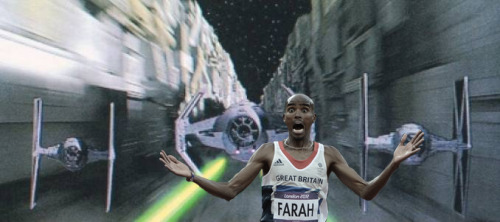
The time since my last blog has seen three major sporting events of interest to me: the Tour de France, the Olympics, and Lance Armstrong's suspension.  (Yes, I classified the suspension as an "event.")  The Tour was fun to watch, but it would have been a lot more fun if Bradley Wiggins and Chris Froome had been on different teams.  The Olympics were great, and I appreciated the fact that so many of the distance races--the Steeplechase, the 5000m, the 10,000m, and the marathon--were shown in their entirety AND were available on demand.  If you haven't looked at Mo Farrah Running Away from Things, what have you been doing on the internet??  Here's a preview:


And then there's Lance.  I've always been a big fan of Lance Armstrong, but not so much that I think it has clouded my vision.  Even though he never tested positive during his seven Tour de France titles, I always acknowledged that there was a possibility that he got away with using performance-enhancing drugs.  I never believed that he may have doped because he was too good; I simply can't be that cynical.  However, he came along during a time when drug use was a normal and accepted practice in European cycling.  To be a European pro was to use drugs, or so it seemed.  Thus, it would come as no surprise to me if it was proven that he had, in fact, taken EPO, HGH, or whatever else.

That being said, I don't really like how the whole thing went down.  From the first announcement last week, it felt wrong to me, and it took me a few days to put my finger on why I was so uncomfortable.  Here it is: ultimately, the USADA banned Armstrong and paved the way for him to lose his TdF titles based on the coerced testimony of witnesses.  They had no physical evidence, beyond a bunch of old samples that could easily have been compromised over the last several years.  By their own admission, they maneuvered around the eight-year statute of limitations because Armstrong wasn't willing to cooperate (i.e. he wasn't willing to say what they wanted him to say).  The only evidence they had was the testimony of several unnamed individuals who said that they either talked to Armstrong about drugs, overheard him talking about drugs, or used with him.  Given the unreliability of eyewitness testimony, the unpopularity of Armstrong in several quarters, and the fact that the USADA allegedly has spent the last three years offering deals to any riders willing to testify against Armstrong, it feels to me like Armstrong got the shaft.  Even if he is guilty, I don't think that the USADA's treatment of him was just.  I don't think it was consistent with constitutionally required due process.  (The judge that ruled against Armstrong last week agrees.)  It likely would not stand up in any criminal court in the United States.  In short, the USADA's treatment of Armstrong feels . . . un-American.

First post in six weeks.  Yep, I think that I got it all. 


Monday, July 16, 2012

Ironman Coeur d'Alene 2012 Race Report!

When I was a cyclist, I would never focus on any particular race.  Rather, I would get in shape and then compete in any race I could find.  Because bike racing is so unpredictable, I couldn't afford to put all of my eggs in one basket.  That is, I couldn't point all of my training toward a particular race because there were always so many factors--factors that might have had nothing to do with who the strongest cyclist was--that would determine the outcome of the race.  I always disliked that about cycling.  In fact, it's one of the reasons that I switched to triathlons.  

As a triathlete, I'm able to pick a single race and focus every training day on getting stronger for that race.  I like that.  As I have made clear in nearly every blog post since January, the focus race for the first half of 2012 was Ironman Coeur d'Alene.  It went very well!

Pre-Race!   

My wife Kacie left to compete in 8-person RAAM a week before I left for Coeur d'Alene.  This was a bit jarring for me given that I'm very attached to my wife.  For the ten days leading up to CdA, I had to be content with looking at her race updates on Facebook and tracking her team's progress on the RAAM web site.  More importantly, I had to travel to Coeur d'Alene alone, and it was a LONG trip.  I flew three hours to Denver, had a four-hour layover, then flew another two-and-a-half hours to Spokane.  There, I rented a car and drove the forty minutes to Coeur d'Alene.  I checked into the Super 8 at about 1:00 a.m. Pacific Time.  I would have felt very lonely had I not met up with my wife's teammate, Anthony Beeson, in the Denver airport.  Anthony and several other people from the Denver/Boulder area were on my flight, and they were very welcoming to me in the days leading up to the race.  I appreciated that.

I spent a lot of time in the three days ahead of the race in my dismal hotel room.  I tried to liven up the place using a poster from the Athlete Guide that I got at check-in:


It kinda worked . . . but not so much.  I soon discovered that I had bigger problems than a boring motel room.  

On Thursday afternoon, I picked up my bike from Tri Bike Transport, and I did a brief ride from my motel onto the run course and back.  From the very start of the ride, my heart rate was significantly higher--like twenty beats!--than it should have been based on my training numbers.  I didn't feel bad and I wasn't breathing hard, but my heart rate never really came down.  For the next two days, it hung out about ten to fifteen beats higher than it should have been, even when I first woke up in the morning.  I'm still not sure why this happened.  Nerves?  (Yes, I was nervous.  Duh.  But nerves shouldn't cause that much of a spike.)  Travel?  (It was a long trip; see above.)  Overtraining?  (This couldn't be it.  I had been very careful.)  Lack of sleep?  (Possibly; I had had trouble sleeping, but an eleven-hour night on Thursday didn't bring my heart rate down as I had hoped.)  I really don't know what caused the heart rate spike.  It didn't start until I arrived in Coeur d'Alene.

By race morning, I was resigned to having a sub-par race as a result.  I ignored my heart rate in Ironman Cozumel to my detriment, and I refused to ignore the lessons that I learned there.  I was frustrated, though, that it appeared that I wouldn't be able to go as fast as I had hoped because my heart--normally the strongest part of me!--wasn't cooperating.  I tuned my TV to the 80s music channel to get my mind off of things, and "Relax" by Frankie Goes to Hollywood was playing.  


(Fortunately, it wasn't a video channel.  I'm not sure that I would have found this video very relaxing.)

I decided to take Frankie's advice.  I relaxed, ate my oatmeal, drank my tea, and I made my way to the start thanks to a ride from my bud Sonja and her husband Troy.  We got there well before 5:00 a.m., and unlike every other triathlon I have ever seen, it was completely light outside.  Cool.  
  
Swim--1:22:55

Because Sonja and Troy got me to the start so early, I was able to get ready for the race without much worry.  I checked my bike several times, I used the bathroom, I ate the bagel I brought with me, and I put on my wet suit.  They announced several times that the water was around 60 degrees, which was warmer than years past but cold enough to keep it "booty-legal."  (And, yes, there were plenty of jokes about that term every time it was used.)  I didn't wear booties, though.  During my practice swim on Thursday with Anthony and crew, I wore a neoprene cap and ear plugs, neither of which I had ever used before.  Even though I had spent six months worrying about the cold water, it really wasn't an issue during the practice swim.  Thus, I decided to stay with that setup for the race.  It's worth mentioning that there was a guy that started next to me wearing only a black speedo.  

I lined up on the far right of the swim, believing that even though I would be very far off the buoys, I would perhaps have less punching and kicking over there.  I was actually standing on the front line, and I even got to dip in the water before the start because I was willing to go so far to the right.  I had high hopes for a solid, clean swim.  

Anthony posted some great pictures on his web site of the swim start.  He somehow had a lot of clean water.  I did not.  [By the way, Anthony, your new bike looks SWEET.]  

The swim was, without a doubt, the most physical swim I have experienced in a triathlon of any distance.  In the first lap, I didn't make more than five strokes without either hitting someone or having someone hit me.  It's worth saying clearly: for a mid-pack swimmer--at least this mid-pack swimmer--the cold is not the main issue in the Coeur d'Alene swim.  It's the physicality. 

Here's a video that someone took of the start.  I'm about as far as you can get from the camera.


Based on my races in Knoxville and Quassy, I knew that the fastest I could expect to swim was about 1:17:00.  I had mentally prepared myself to swim 1:20:00 or so even though I swam 1:20:00 in Cozumel and I have improved IMMENSELY as a swimmer since then.  The first lap was a bit under 39:00, and the second was over 44:00.  There was nearly a six-minute drop-off between laps one and two for me, even though things spread out and cleared up a little bit--a little bit--after the first lap.  I attribute this slowdown to three things.  First, I was getting a bit frustrated.  The constant contact had worn on me after 45:00 or so, and I was getting tired of people either swimming sideways or simply stopping right in front of me to rest, to sight, or to just assess the situation.  ("What are you doing??  Swim, motherf******!!"  No, I didn't actually say it, but I thought it.)  I was not the only person getting frustrated.  There was a lot of yelling mid-pack during the second lap.  I swear that I saw a dude in a red and black TYR wetsuit rear up and throw a punch.  Being frustrated only slows you down, though.  Smooth is fast, and it's hard to be smooth when you're angry.  Second, the cold started to get to me a bit.  Specifically, I couldn't keep my fingers together.  I imagine that it was probably affecting me in other ways, too--like pointing my toes, keeping my head up, or lengthening my stroke--but the fingers were the most obvious to me.  Third, a great deal of waves kicked up in the third lap.  The wind picked up, and that made swimming more difficult.  Of course, I didn't realize it was the wind, and my frozen brain thought that the waves were coming from boats on the lake.  That only served to make me angrier and more frustrated--"What are boats doing out here!?!?"--thereby slowing me down further.  Sonja told me that she had the same thought two years ago in Coeur d'Alene.  She also called the swim "one of the toughest IM swims out there."  

I ran out of the water quickly, noted my time, and just kept going.  I knew when I was approaching the swim finish that my time would be slower than Cozumel, so I didn't let it bother me when it was.  The goal was to be in the middle of the pack in the swim, and when I checked my results at the race's conclusion, I found that I was 1246th swimmer out of just over 2300.  I was 166th out of about 300 in my age group.  Middle of the pack.

T1--6:11

The big drawback of being middle of the pack--in addition to the constant contact with other swimmers--is a crowded transition area.  The tent was so full that I had to sit in the grass outside and I had very little contact with volunteers.  In addition, my cold hands made it hard to put on my socks and arm warmers.  Finally, when I grabbed my bike, I was kinda stuck behind a lot of other people walking their bikes out of transition.  All of these things conspired to make T1 at least two minutes slower than I would have liked.  In the end, I don't think that it mattered. 

Bike--5:14:16

I was very eager to get on the bike.  Not only does the beginning of the bike signify the end of the stuff I can't do (i.e. swim) and the start of the stuff I can do (i.e. bike and run), but I spent A LOT of time on my bike in the last six months.  In addition, I had chosen Coeur d'Alene for its hilly bike course, and I knew that I was stronger than most of my competitors going uphill.  At the same time, I knew that I would ruin my race if I tried to catch everybody on the first lap.  Here I am in the first ten miles, telling myself to stay within my limits:

(Wait . . . are those quad muscles?)

My plan for the bike was fairly straightforward.  I would keep my HR below 150 on the flats, and I would keep my wattage around 270 watts on the climbs.  I ate a PowerBar in the first stages of the bike (which served the dual purpose of refueling after the super calorie-intensive swim and getting me off to a relaxed start on the bike.)  I would drink one bottle an hour and take one PowerBar gel each hour.  I started training with PowerBar drink when I found out that it would be on course at Coeur d'Alene.  This enabled me to keep only one bottle on my bike, which I like.     

The bike loop--which was new for 2012--consisted of a short out-and-back of about 15 miles, then a longer out-and-back of about 42 miles.  Then you did the whole thing again.  At the center was the town, which was jammed with spectators and fans from the very start.  

In the opening miles of the bike course, I got my first glimpse of the Coeur d'Alene fans.  By the end of the race, I would realize that this was the best group of fans I had ever experienced as a racer.  There were people in costumes, people playing bagpipes, people dancing, people singing karaoke . . . it was a very festive atmosphere.  I highly recommend Coeur d'Alene not for the scenery (which was great) or the hills (which were awesome), but for the fans.  I'll never forget that girl standing on stage, singing "Baby" by Justin Beiber at about the six-mile mark of the bike.  I nearly burst out laughing, which is exactly what I needed at that point.  

I hadn't expected wind on the bike course.  I had spent so much time reading and thinking about the hills that I didn't even consider wind.  In fact, it was very windy on race day.  The same wind that brought waves in the second loop of the swim made a difficult bike course even harder.  In addition, the downhills on the bike were not as fast as I had thought they would be.  There was a lot more gradual climbing and descending--1% to 3% grades--than I expected.    

There were some uphills in the first part of the bike, but the first true climb came around mile 18.  When you use a power meter, you can't keep your power reading constant.  Thus, if you are trying to average 275 for a segment, you try to keep the readings between 260 and 290.  Because I wanted to keep my wattage going uphill around 270, I needed to keep it between about 250 and 290.  In other words, my wattage readings needed to be in the 250s, 260s, 270s, or 280s--the 5s, 6s, 7s, 8s.  As soon as I started going up it, the first ten seconds of Huddle Formation by The Go! Team caught in my head:


Literally, just the first ten seconds: "5, 6, 5, 6, 7, 8 . . . duh, nuh, nuh . . ."  I began to look forward to the uphills because I was enjoying singing this song to myself so much.  

I also looked forward to the uphills because I was much stronger than most folks on the uphills.  Months of climbing and watching what I ate paid off in that every time the road pitched up, whoever was with me disappeared.  As soon as I would crest a hill, I would try to bring my HR back under 150 and heavier, more powerful riders that I had crushed going uphill would suddenly re-appear and pass me.  Because there was so much uphill on the course, though, I would eventually pass these riders and not see them again.  In my head, I began to refer to the riders that would pass me on the downhills as the "Clown Parade," and when I would pass people going uphill, I would think things like, "I bet that he's going to be leading the Clown Parade in a few minutes."  It happened throughout the entire bike ride.

During the first few hours of the bike, I found that my heart rate, as I had feared, was higher than it should have been.  Around the 75-mile mark, though, I decided on a whim to check my average power.  To my surprise, I found that it was about what I had hoped to average.  Thus, even though I thought that my heart wasn't quite cooperating, I was managing to still put in the wattage that I had planned to ride.  That gave me a boost, and it made me feel that even though my time-checks were not super-fast, I may well have been  putting in one of the faster bike splits.  In fact, I felt so good that I decided to push a bit more on some of the uphills in order to get just a little bit more distance on the Clowns (who, by this time, I had started calling by a much less polite name). 

This was one of two places that I strategically deviated from the plan on the bike.  The second was in regards to nutrition.  Because it was cool and overcast for nearly the entire bike, I ended up not drinking as much as I had planned.  This is only a problem because I drink the majority of my calories on the bike.  No drinking meant fewer calories.  I had to make up the deficit by grabbing extra nutrition on course.  It worked out well, and in retrospect, I am very proud of not only having stuck to my plan, but also knowing when I needed to modify it to fit in-race realities.  

My back wheel started misbehaving on a downhill around 100 miles into the bike.  I had to pee from about mile 30.  I got stuck behind a very slow rider in the final uphill No-Pass Zone with only about a mile left in the bike, which probably added at least 90 seconds to my bike split and let about fifteen people that I had distanced catch up with me.  Otherwise, I couldn't have been happier with my bike split.  

My bike split was the eleventh-fastest non-pro split in the race.  It moved me from 1246th in the race to 130th in the race.  It moved me from 166th in my age group after the swim to 24th in my age group.  I  averaged 214 watts on the hilly, windy course, and my normalized power was 229.  My average HR was 151.  Most importantly, I felt ready to run.          

T2--2:18

This was slowed by a much-needed bathroom stop and hastened by a very helpful volunteer.  I changed into my neon tangerine Adidas, switched out my sunglasses, and took off.

Run--2:59:22

About eighty miles into the bike, I had a key revelation: I came here to run.  Yes, I enjoy cycling, yes, I am a solid cyclist, and yes, I had spent more time on my bike than in the pool or on the roads and trails.  What I do best, though, is run.  All of that time spent on the bike was not intended to speed up my bike split.  It was intended to make that split easier so that I could run faster.  I didn't come to Coeur d'Alene to bike, I came to run.   

As soon as I realized this, I began to get very excited for the run.  I started thinking, "Wait till you see me run!"  I had trained to have a good run, and I had executed the race that would lead to a good run.  It was all I could do not to explode onto the run course.  

My nutrition plan on the run was to drink only water and take a PowerBar gel roughly every two miles.  I had trained this way, and it seemed to work.  PowerBar gels are thinner than other gels, and they therefore feel "cleaner" to me--as if they won't sit in my stomach, weigh me down, and cause cramps.  I had begun taking caffeinated gels about 2/3 of the way through the bike, and I alternated between caffeinated and non-caffeinated gels on the run.  In my T2 bag, I had two baggies: one with caffeinated gels that I emptied on the run and stuffed into my right pocket, and one with non-caffeinated gels that I emptied on the run and stuff into my left pocket.  Those made for full pockets, and I dropped two gels that I had to turn around and pick up in the first mile going uphill out of town.  Nonetheless, I ran a 6:25.  I came to run.   

The second mile was a 6:12, even though I spent the entire mile telling myself to relax and slow down. (Because my heart rate had given me so much stress in the days leading up to the race, I refused to run using HR and instead decided to go on instinct.  I have good running instincts.)  The third mile was 6:27.  The fourth mile, which included a long uphill, was 6:18.  I actually laughed when I saw that split because I knew I was running relaxed and I was on the right pace.  And as it happened, the right pace was a 6:18.  

Things continued this way for the first half of the run.  The only mile that was over 7:00--a 7:10--was the one with the big uphill (where we had to run on slanted pavement--that sucked).  I kept taking gels every two miles and kept pausing to drink water at the aid stations.  I was using sponges a great deal because during T2, the sun came out.  Then, around the halfway point . . . 

I saw Kacie for the first time in over a week and a half.  My wife and I don't spend very much time apart, and in fact, the stretch between June 13, when she left for RAAM, and June 24, when I saw her at the halfway point of the Coeur d'Alene run, was the longest that she and I had been apart since we were married five years ago.  We love each other, of course, but we're also very attached to one another.  We're buddies.  We're close companions.  I had been looking forward to seeing her on course since she left eleven days earlier.  As we had planned, she flew in from the east coast during the early stages of the race and arrived near the end of the bike.  When I saw her, I kid you not, I was so overwhelmed with emotion that I almost threw up.

Fortunately, I held it together.  She was wearing a shirt that said "Catch the Swimmers!" that she had custom-made for this race.  (My mantra during my long runs had actually been "Kill the Swimmers!" but she rightfully thought that that would be in poor taste.)  I looked at her and told her how well I was running--I dropped an F-bomb in my description for some reason; sorry, CdA parents who were lining the course with your ten-year-olds--and of course, I said, "I came to run!"              

I ran around the town and back out to where she was, and I nearly got sick again.  I held it together, though.  Around mile 14 (6:21), I passed a guy who said, "How old are you?"  38.  "Are you on your second lap?" Yes.  "Are you doing the run/walk method?" No.  "F***, you're fast!"  That might have been my favorite comment from a competitor.  I also got a lot of comments (mostly from fans along the course) about my shoes.  Sweet.   

I ran on, and my splits on the second lap were, as could be predicted, a bit slower than the were on the first.  They stayed mostly under 7:00 per mile, though, even though I was taking a bit longer walking through the aid stations.  I caught up with a fella in the age group below me, and he and I ended up running together for several miles.  During this stretch, I began to focus heavily on two things: going under three hours and having the fastest non-pro run.  I stuck to my nutrition plan, even though I was damn tired of gels by the time I got to mile 18 and had to take my ninth gel of the run.  I kept passing people and passing people and passing people, even though it became difficult to tell who my competitors were as the course began to fill with runners on their first loop.  In the twenty-fifty mile, I thought I saw a few people who looked to be my age and my speed up ahead, and I dug deep for a 6:33 twenty-fifth mile.  Soon after, the course directed us across a parking lot and down a long, straight, downhill avenue to the finish.  

The finish line was brilliant.  It was nearly half a mile of a four lane road, with hundreds of fans lining each side of the road.  It was slightly downhill, and I was the only person on the road.  My run had moved me from 130th overall to 21st overall (10th non-pro) and from 24th in my age group to second in my age group.  I had no idea of my place, but I knew that I had had a great race, capped by a great run.  I high-fived the fans in the last 200 yards or so and crossed the finish line in 9:45:02.  I had the fastest non-pro run of the day by about five minutes.  Here it is in black and white:  

(The finish line was so fantastic that I won't even mention that the distance between mile 25 and the finish was more like 1.5 than 1.2.) 

The third-fastest runner--Ivan--was the winner of my age group.  The fourth-fastest runner--Justin--is the guy I ran with for a few miles between 16 and 24.  The eighth-fastest runner--Anthony--is my wife's teammate from Boulder.  Also of note: I had the fastest non-pro bike/run combo of the day.   

Kacie ran down to the finish line from the spot where she had been cheering and told me my place.  "We're going to Hawaii!"  

Post-Race!          

I limped my way through the finish area, and I gathered my medal, t-shirt, and hat.  I got a massage and drank some chocolate milk.  My legs were tight and tired, and the bursitis that has plagued me since January really hurt.  Nonetheless, I can say that I was as satisfied with this race as any race I've ever done.  I was indeed pleasantly exhausted.  

Kacie and I made our way back to the hotel, where we found what happens to your back in an Ironman when your wife is not there to help you with your sunscreen:


We went out to eat at a local pizza place, MacKenzie River Pizza, where the manager bought me a beer and gave us a discount on our meal.  (Like I said, Coeur d'Alene folks are pretty awesome.  The ladies next to us offered to buy me a second drink, but I declined.) 

After Kacie--who, remember, had just finished RAAM and was working on less than twenty-five hours of sleep over the previous seven nights--took a nap in the car, we went downtown to watch the final finishers.  It was fantastic.   

(No snarky caption here.  It was very nice to be back together with my wife.)

The next day, I claimed my Kona spot:


I was presented with my award:

(I am the handsome one second from the left.)

And I collected my trophy:


We hung out for one more day in Coeur d'Alene--Java on Sherman is the best place in town, by the way, closely followed by MacKenzie Pizza and Moon Time--flew home, and jumped on a flight to London less than twenty-four hours later.  Because of all of the flying, my legs were swelled until Saturday; it was almost a full week before I could see my ankles.  We got back from London and went directly to the beach for a week.  I did no exercise at all while we were in London (besides sight-seeing), and I only did a few short bike rides at the beach (plus some sea-kayaking!).  I ate a lot and undoubtedly gained  few pounds.  As of our return from the beach today, the mental and physical recovery from Coeur d'Alene is over.  In fact, this race report closes the book on Coeur d'Alene 2012.  Kona training starts tomorrow.  I have twelve weeks.    

Finally, after this long race report, I want to give thanks to all of the folks who supported me throughout my training for Coeur d'Alene and during the race.  Chief among these people is my wife, who is a source of both support and inspiration.  My parents also supported me a great deal, and they even followed along on race day.  (My dad reportedly had tears in his eyes when he saw how well I ran.)  Several friends and teammates followed online, including Erik (who kept everyone updated on Facebook), Dani (who evidently danced throughout her house), Jason ("This is sick!"), Harvey (who never let one of my tweets go unaddressed between February and June), and the rest of the folks at All3sports.com.  My wife's teammates were also instrumental in their support, including Jill, Anthony, Kelly, Colleen, Andree, Mark, Michael, Josh, and several others.  Needless to say, I couldn't have done it without the guidance of my coach, Will Dillard.  The good people at H20 Audio and Cycleops also deserve thanks for sponsoring me and providing me with vital training and racing tools that I used both leading up to Coeur d'Alene and during the race.  I look forward to flying the flag for them in Hawaii.

And now it's on to the Ironman World Championships in Kona!

Tuesday, June 19, 2012

Sunday, SUNDAY, Sunday!

I started training for Ironman Coeur d'Alene about six months ago.  It's now five days away.  However you choose to say it--the most popular phrase is "the hay is in the barn," but around here, we say, "Walter is on the plane"--the work is behind me.  All that is left is the race!  


First things first: here's how to track me at Ironman Coeur d'Alene.

I am racer number 1543.  If you go to Ironman.com, there should be a special link at the top of the page where you can click to get live race tracking of IMCdA.  (Note: Ironman France is happening on Sunday, too, and I won't be competing in that race.  So don't try to find me there!)  It will prompt you to enter my last name ("Darden"), and then it will give you a list of folks with names close to mine.  If you click on my name, it should tell you where I was at the last checkpoint, my paces, and where I am relative to my competition.

I'm hoping that a few friends will be posting updates on my Facebook profile, too, but I'm not sure about that. 

I really do appreciate it when my friends follow along.  It gives me a huge boost knowing that there are people out there taking time to see how things are going for me and pulling for me from afar.  I will need this mental lift more than ever on Sunday since Kacie won't arrive in CdA until about six hours into the race.    

Am I ready?  I believe so, but anyone who has ever done any race knows the self-doubt that can creep in here at the end.  (In fact, the organizers of Ironman Coeur d'Alene today tweeted an article about mental preparation in the final days ahead of the big race.)  All signs point to my having a good race.  I've certainly done the training, starting way back in January with trainer sessions and long rides.  I used Twitter and Facebook as means of not only bragging about the training I was doing, but to keep myself accountable.  It now serves as a log of what I've been doing for the past several months.

January 7, when things were just getting underway after a post-Ironman Cozumel break:


February 18, when I did my first of about a dozen rides in the mountains:


March 10, more mountains: 


March 18, still more:

March 30, some improvements in the water:

May 17, starting to really train like Ironman:


June 10, my second eight-hour bike ride:


June 11, my second 20+ mile trail run, this time in the rain:


There have been good benchmark events--"B Races"--along the way, too.


And then there's this:


Since I began training specifically for Ironman Coeur d'Alene on January 9, 2012, I've logged over 200 hours on my bike (nearly 4000 miles), including eleven rides that featured significant climbing and fifteen trainer sessions.  I've spent more than 28 hours in the pool (~84000 yards, or 47 miles).  Despite an injury to my heel, I've run more than 40 hours (about 340 miles).  If you factor in all the time lifting weights (but leave out the time spent stretching, icing, driving to and from training and racing sites, and going to the chiropractor, nutritionist, ART folks, and massage therapists), I've spent about 300 hours in motion specifically preparing for this race over the last twenty-three weeks.

So what will I consider a successful race?  The first goal, as it always is in our family, is to get to the starting line healthy and uninjured.  Barring anything catastrophic in the next couple of days, and putting aside the nagging bursitis in my left heel, I am confident that I will make it to the starting line.  The second goal, as it always is in our family, is to finish.  Once again, barring anything catastrophic in the next couple of days or during the race itself, I am confident that I will make it to the finish line.  But what then?  It would be dishonest for me to say that I would be content solely with finishing given the amount of work I've done and the results I've had throughout the spring.  We chose Ironman Coeur d'Alene specifically because it was a course--i.e. one with a wetsuit swim and a lot of hills--that would suit me.  I don't want to go into too many details about my time and place goals, but it would be a surprise to no one for me to say that I am focused on winning a spot in the Ironman World Championships in October in Hawaii.

This is, of course, no small task, given the competitiveness of my age group and the fact that I learned to swim exactly one year ago this week.  There will probably be six or seven people in my age group who will qualify, which means I need to finish in the top five in my age group just to be certain.  If Coeur d'Alene follows the pattern of the races I've done so far this year, I'll be a middle-of-the-pack swimmer, but one of the fastest cyclists and one of the very fastest runners.  In specific terms, this means that coming out of the swim, I will probably be somewhere around 200th in my age group and 1200th in the race.  If things go well, I'll pass most of those folks on the bike and almost all of the rest of them on the run.  Ironman is much tougher than the shorter races, but there's no reason for me to believe that it won't follow the same general pattern as the other triathlons I've done as long as I execute my plan.  

Cold execution of the plan.  My wife Kacie brilliantly demonstrated the effectiveness of this when she finished third in her Double Ironman in February.  This is all the remains for me.  Think good, relaxed, fast thoughts for me on Sunday morning, starting at 7:00 a.m. Pacific Time!    

Monday, June 11, 2012

Crazy Ol' Quassy!

Last weekend, my wife Kacie, our friend Sparkles, and I all went to Middlebury, CT, to compete in Rev 3 Quassy.  There was an Olympic distance triathlon on Saturday and a half-iron distance triathlon on Sunday.  Kacie and Sparkles would be reprising their roles as 2/3 of a relay on each day.  As was the case in Knoxville, our friend Jill would be swimming at each event.  With Ironman Coeur d'Alene looming only three weeks away, I opted to compete solely in the half-iron aquabike event.  The weekend was quite an adventure!

Last year, Kacie and I made this same trip.  It's a fun way to start the summer, and it's good to see many of Kacie's teammates.  Like last year, we stopped in Raleigh, NC, on the first night to hang out with and sleep at the house of my Aunt Georgia.  She was hospitable as usual, and it was great to see her.  We then traveled the rest of the way up.

There were two big changes in the drive this year.  First, we had Sparkles with us!  This is always a bonus for a variety of reasons, not the least of which is her willingness to take pictures while in transit:

(I probably should have had my eyes on the road.  We were going about 75 mph at the time of this shot.)

Second, we took a much different route that avoided the large cities.  Thus, rather than getting stuck in massive traffic in Richmond, Washington, Philadelphia, and New York, we got stuck in a little traffic in Maiden Creek and Kutztown, PA.  Overall, it was a better route, until we were STOPPED by traffic in the LAST TEN MILES OF THE DRIVE.  The last ten miles, all in Connecticut, took us over an hour.  That sucked.  With a bit of creative navigating, though, we ultimately arrived at the race site:

   
The Quassy Amusement Park is a small, family-owned, old school amusement park with wooden roller coasters, a merry-go-round, and the most immodest bathrooms on the planet.  It's not a place that you would initially say, "Oh, yeah, this is a good place for a race."  It is a great place for a race, though; there's a big lake, and it's situated amongst medium-sized roads in a hilly area.  We've had good experiences there both years.  

The word of the day on Saturday was rain.  Rain, rain, rain.  Happily, I was only a spectator that day; it was miserable.  In twenty years, I have only seen a race held in weather that bad once before: the 1995 NCAA District IV Cross-Country meet at Furman University.  That day, my coach looked at me about five minutes before the start, and said, "You know, cross-country is a fucked up sport."  He was right.  Evidently, triathlon is, too.  Here was the scene at the start of Saturday's race:


The weather was so bad as to be ridiculous, and this overall feeling can be summed up by Jill's struggle with her wetsuit:    

    (Note: Jill wore her jacket in order to stay DRY, while putting on her WETsuit.  This was at least ten minutes and a full can of Tri-Slide into the process.)

Jill eventually got her wetsuit on, and the Tri-anosaurus Rex was ready to give it another go:

(Grrrrrr!!!!  We're cold!!!!)

Kacie was understandably nervous about riding in the rain given the Darden family history of cycling mishaps in the rain.  As I stood with her in the transition area, the ambulance lit up and drove out of the parking lot, and the DJ said, "That's never a good sign." Kacie nearly bagged it right there.  But she didn't, and she ended up riding well.  Sparkles ran well, and the team took home second place in the relay division:

    (Go, Tri-anasaurus Rex! Rawr!!)

On Sunday, the weather was better, although there were still plenty of puddles.  When we arrived on site, we were directed by a volunteer to park on a baseball field.  I hesitated a bit, and then drove directly into the mud:


The volunteer saw that we were stuck, and then took off in the other direction.  She was gone like a flash.  In retrospect, her rapid escape is kinda hilarious.  I presume she thought I was going to yell at her.  There was no moving this car, though, so we left it in the mud and went to race.  The car's predicament strangely presaged the mechanical issues to come.  

Jill and I started together, since relays and aquabikes started together.  (This meant that for the second race in a row, Jill had to babysit me as I stood there in my new wetsuit getting nervous.  It's not an enviable position.  Thanks, Jill!)  We swam almost exactly the same split; Jill told me later that she intentionally moved away from me as soon as the gun went off so that we wouldn't be kicking and punching each other the entire time.  My time put me right in the middle of the pack, which is what I seem to be no matter what the event, the wave, the distance, or the effort I put forth.  Jill passed off to Kacie, and I changed into my cycling gear.  I then found that my front tire was completely flat.  I quickly changed it, pumped up the new one, and I started to make my way out of transition.  Before I made it 100 feet, though, the new tire also went flat.  I was at a loss as to what to do, and I stood around for a minute or two before I realized I could take it to the mechanic at the edge of transition.  He changed the tire very methodically, and he lectured me throughout about how triathletes need to learn to change tires.  I was in no position to rush him or to explain that I did know how to change a tire (and in fact, had just done it).  So I listened quietly, thanked him when he was done, and bolted out of transition with a 15:23 transition time.  Since I was in the last wave of the day, the transition area was virtually empty.  Mine was probably one of the last five bikes to leave, which meant that about 1100 people were in front of me.  

I probably caught 900 of them.  No joke.  I had a brilliant ride on my newly-tubed tire.  My bike split was the fastest in the aquabike division by about 10:00.  It was faster than any relay or age-grouper, it was faster than nine of the twenty pro men, and it was faster than all of the pro women.  Yes, of course, I did not have to run afterwards and most other folks did, but nonetheless, 2:25:00 on the super-hilly Quassy bike course is smoking.  And even though I intended to give it everything I had, I still felt like I had a bit in reserve at the finish.  This was a fantastic confidence-builder for CdA.  

While Sparkles was running, Kacie and I were able to get the car unstuck thanks to a teen-aged park employee and a good samaritan that got super-muddy in the process:

  (Notice the beer in the good samaritan's hand. He said afterwards, "Oh, man, I was just drunk enough to agree to this.")

For the remainder of the ride home, this was our view out the front windshield:

(It's been eleven days, and we still haven't gone to a car wash.)

The three of us headed out of Middlebury, had dinner with friends in NYC, and then drove through Sunday night and into the next morning in order to get home without stopping.  In all, we went about 2200 miles, roundtrip, in five days.  We slept the rest of the day on Monday, and then I went out for a 20+ mile run on Tuesday to kick off my last two big weeks of training.  (It felt terrible.  Undoubtedly, we ate way too many cookies at Dottie's Diner before we left!)

My next blog post will be my last one before Ironman Coeur d'Alene.  In it, I'll disclose my goals and share my tracking information.  My next blog post after that will be my race report.  (Saying that makes it feel really close!)  Even though it was intense and draining, Rev 3 Quassy was both a great way to start the summer and a really good last benchmark ahead of Coeur d'Alene!